

Dental anxiety & additional needs
Tell us about your child’s communication, sensory or support needs before the appointment. Our pediatric dentists can discuss how to adapt the visit.
Tell us about your child before the appointment rather than at the door — what sets them off, what settles them, how they communicate, what went wrong last time. Our pediatric dentists adapt the visit around that, using social stories and an approach informed by applied behaviour analysis, and nothing is used before it has been shown.
When you cannot ask, and they cannot tell you
A child who does not describe pain still shows it. Any of these is worth an appointment:
- Turning away from hard or chewy food they used to eat
- Holding or pressing the face or jaw
- Meltdowns that cluster around mealtimes
- Refusing to be brushed when they tolerated it before
- More drooling than usual
- Grinding that has become constant
- Dark spots or chalky white patches on a tooth, or gums that are red, swollen or bleeding
- Breath that does not improve with brushing

How we work around your child
- 01Before you comeTell reception what we need to know: sensory triggers, what calms your child, how they communicate, and how previous dental visits went. It changes how the appointment is set up, not only how it goes.
- 02Nothing before it has been shownTell, then show, then do. Each instrument is named and demonstrated before it is used, at your child’s pace rather than the clock’s.
- 03What can be adaptedLighting, noise, breaks, the order things happen in, and whether you sit beside the chair or step back. Ask for what your child needs — most of it is straightforward to arrange if we know in advance.
- 04If the chair is not going to work todayThen we say so. The options get talked through — laughing gas, sedation, or treatment under general anaesthesia in hospital — and a plan is made. Nothing is forced.
Social stories, and an ABA-informed approach
The clinic integrates Applied Behavior Analysis into how it approaches dental visits, and the dental staff use social stories — a short, personalised account of exactly what will happen, read several times before the day — to take the unknown out of the appointment. That is the clinic’s own description of its method, and it is the part worth asking us about.
The other half of it is repetition. A first visit with nothing wrong is not a wasted visit: it is how a child learns the room, the chair and the people before anything has to be done to them. Where a child needs several of those before any treatment, that is how it gets planned.
The clinic sees children with autism spectrum disorder, Asperger’s syndrome, pervasive developmental disorder and sensory processing disorder, as well as developmental delay and physical disability. Tell us the diagnosis if there is one, and the behaviour if there is not — the second is more useful to us than the first.
What you can practise at home
Rehearsal does more than explanation. Count teeth in a mirror together. Let your child look in your mouth. Play dentist with a doll or a toy. Practise lying back and holding the mouth open for a few seconds at a time, then a few more.
Keep the language flat and specific — "the dentist will count your teeth" rather than "it won’t hurt". Promising that nothing will hurt stakes everything on the one thing you cannot control, and children remember which promises broke.
Morning appointments tend to go better than late-afternoon ones. Ask for a time when your child is usually at their best, and say so when you book.
What to bring
Familiar things do a lot of work in an unfamiliar room.
- A favourite toy, blanket or comfort object
- Noise-cancelling headphones, with their own music if that is what helps
- Sunglasses, if bright light is the problem
- A fidget or sensory object they already use
- A tablet with something calming on it — mention it to the dentist first
- The social story you have been reading, so we are working from the same script
Who you would see
 Dr. Mustafa AbdallaSpecialist Pediatric Dentist & Dental Director
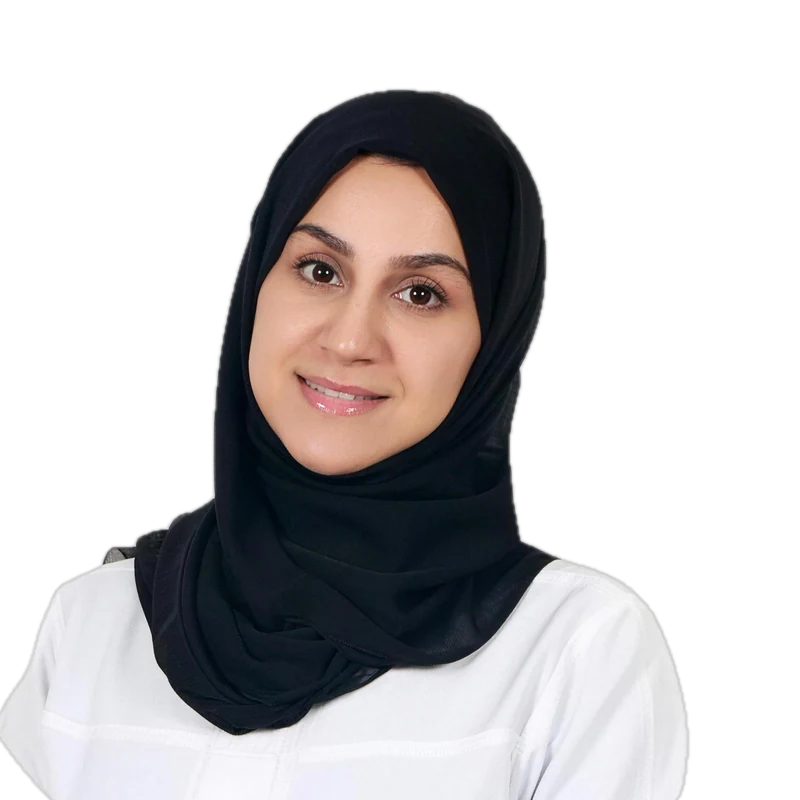 Dr. Shaima BuhamerSpecialist Pediatric Dentist
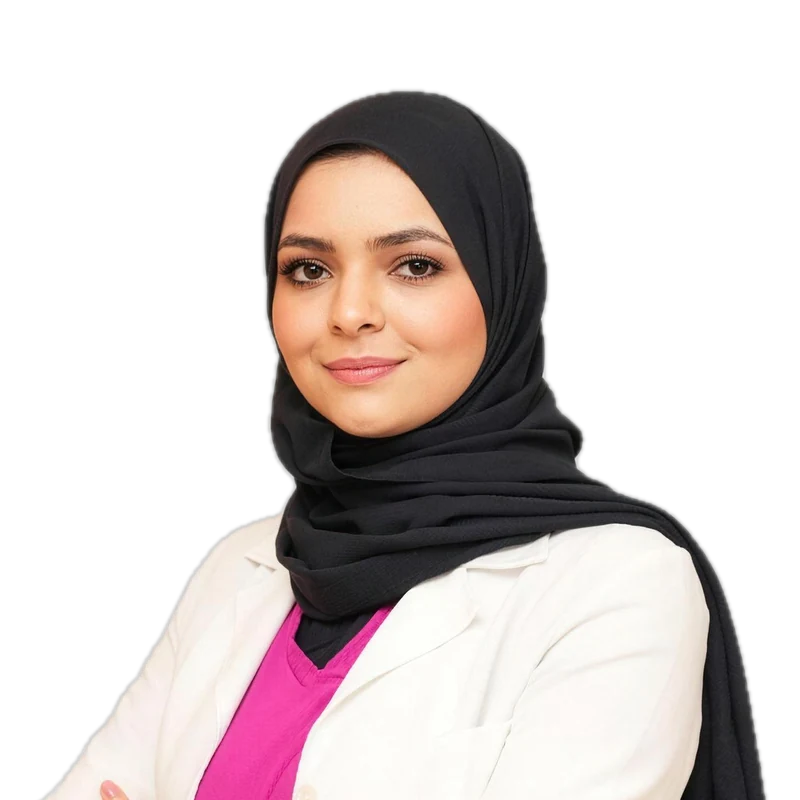 Dr. Sharifa AlHajSpecialist Pediatric Dentist
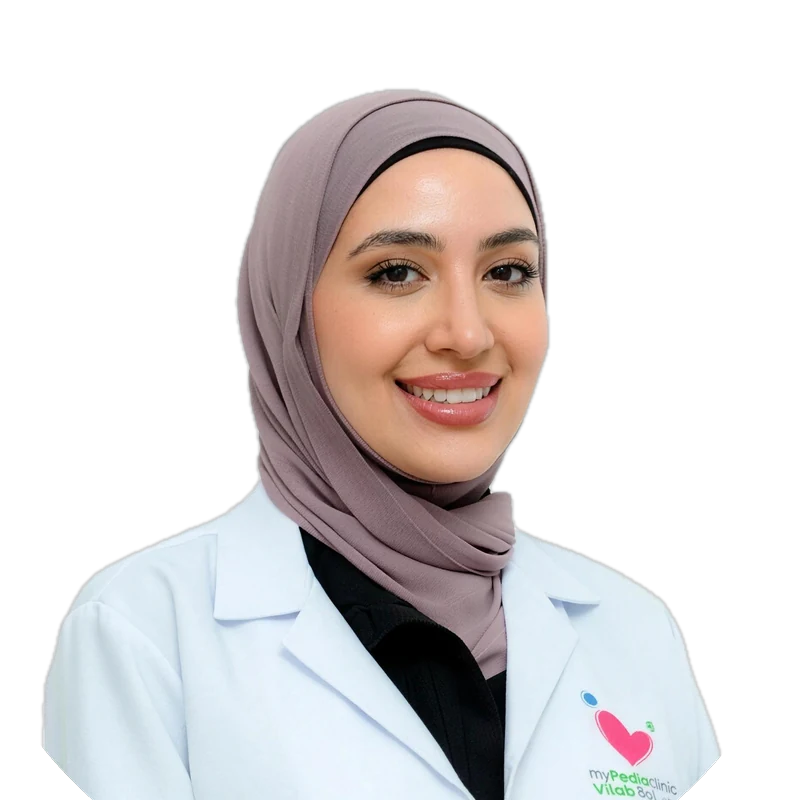 Dr. Sara Atif MustafaSpecialist Pediatric Dentist
Every doctor consults in English and Arabic.
Should I stay in the room?
Usually, and you are welcome to. But it is worth knowing that some children cooperate better without a parent watching — they engage directly with the dental team instead. That is ordinary development rather than a sign of anything, and it is not a judgement about you. The dentist will suggest what looks likely to work and you decide.
What if my child will not get into the chair at all?
Then that is the appointment, and it still counts. Sitting in the room, meeting the dentist, touching a mirror, leaving without anything being done — that is a successful first visit for some children, and the next one starts further along. Treatment that genuinely cannot wait has other routes.
Is sedation an option?
Yes, and it is not a first step. Nitrous oxide — laughing gas — leaves your child awake and responsive and suits many children with sensory sensitivities or additional needs. Where that is not enough, treatment under general anaesthesia is carried out in a hospital, with everything completed in one session. Both are decided with you, after an assessment.
My child has no diagnosis, but the dentist is impossible. Does this apply to us?
Yes. Nothing on this page requires a diagnosis. Fear of the dentist, a previous appointment that went badly, a gag reflex, sensory sensitivity without a label — the same adjustments apply. Tell us what happens and we will work from that.
What should I tell you before we come?
What triggers distress, what calms it, how your child communicates and what they understand, what happened at previous dental or medical appointments, any medications, and what you have already tried at home. Put it in the booking rather than saving it for the chair. It is the single most useful thing you can give us.
What will this cost?
Tell reception your insurer when you book. We hold direct billing agreements with fifteen insurers, and cover differs between the pediatric and dental departments, so we check your eligibility before the appointment rather than at the desk. Anything not covered can be split into four payments with Tabby.
Your next step
Start with a conversation.
Tell us what is on your mind and reception will confirm the right specialist and a time.
- Opening hours
- Sat-Fri: 9AM - 6PM
- Insurance
- Direct billing with 15 insurers. Check yours
- Find us
- Al Razi Building 64, Block B
Dubai Healthcare City