

Dental emergencies
For a dental concern that needs prompt attention, call the clinic to explain what has happened and ask about arranging a visit.

A knocked-out permanent tooth is a thirty-minute problem
Permanent teeth only — a knocked-out baby tooth must never be pushed back in. Reimplanted within fifteen minutes, a permanent tooth succeeds in roughly 60 to 85 per cent of cases; within an hour in a proper medium, 40 to 60; after an hour, 10 to 30. Past two hours it rarely works. If you cannot reinsert it, cold cow’s milk keeps the ligament cells alive for up to six hours. Note the exact time it came out.
Call reception on 055 931 1752 and say it is an emergency. We are open Sat-Fri, 9AM - 6PM — outside those hours the first aid on this page is what matters most.
If a permanent tooth has been knocked out, what happens in the next thirty minutes decides whether it can be saved. Pick it up by the crown, put it back into the socket if you can, and if you cannot, keep it in milk. Then call reception on 055 931 1752, open Sat-Fri, 9AM - 6PM.
What counts as a dental emergency
Some of these need us within the hour and some can wait until morning. Call and describe what happened, and reception will tell you which this is.
- A permanent tooth knocked completely out
- A tooth pushed out of line, or loose, after a knock
- A tooth chipped or broken — urgently if there is sharp pain or sensitivity to air
- Pain that wakes your child at night, or that painkillers are not touching
- Swelling of the face, a fever, pus on the gum, or difficulty swallowing
- A bitten lip or tongue still bleeding after fifteen minutes of pressure
- A broken bracket, or an orthodontic wire poking into the cheek
A knocked-out tooth: the first few minutes
- 01Check which tooth it isPermanent teeth are larger, whiter and more defined in shape; baby teeth are smaller and rounder. A child of six or under usually has only baby teeth. A knocked-out baby tooth must not be pushed back in — it can damage the permanent tooth forming above it. Keep it in milk and bring it.
- 02Pick it up by the crown, and rinse only if it is dirtyThe crown is the chewing surface you normally see; never touch the pointed root end, because the living cells on it are what let the tooth reattach. If it needs rinsing, a few seconds of cool water or milk. Do not scrub, do not use soap or toothpaste or alcohol, do not dry it and do not wrap it in tissue.
- 03Put it back in, if you canRinse your child’s mouth clear, line the tooth up the right way round, and press it in until it is level with the others. Have them bite gently on a clean cloth to hold it. Do not force it — if it will not go, move on.
- 04Otherwise, into milk — and note the timeCold cow’s milk is the best practical medium; the ligament cells survive in it for up to six hours. Saliva next, then saline. Never tissue, never a dry container, never ice. Write down the exact time the tooth came out, then call us.
Why the first half hour decides it
The root of a tooth is wrapped in the periodontal ligament, the living layer that anchors it into the bone. Those cells are what allow a tooth to reattach, and they die quickly once the tooth is out and drying. That is the reason behind every rule above: hold the crown, do not scrub, do not let it dry out.
It is also why a baby tooth is the opposite case. Pushing one back into the socket can damage the permanent tooth forming above it, so a knocked-out baby tooth is kept in milk and brought in, never reinserted. If you are not certain which you are holding, do not put it back — bring it and let us look.
Once here, a permanent tooth is repositioned under local anaesthetic and splinted to the neighbouring teeth for a week or two while the ligament reattaches, then watched for months afterwards — the nerve can die from the trauma, and root canal treatment is sometimes needed later.
When it is the hospital, not the dentist
Go to a hospital emergency department rather than a dental clinic if there has been significant head trauma or any loss of consciousness, if bleeding will not stop with pressure, if the jaw looks deformed or will not close, if swelling is affecting breathing or vision, or if there is fever with difficulty swallowing. Those are medical emergencies before they are dental ones.
Everything else — a knocked-out tooth, a broken tooth, severe toothache, a tooth loosened by a fall, an abscess without fever — is dental. Call first either way, so we know what is coming and can talk you through the first aid while you travel.
Reception is open Sat-Fri, 9AM - 6PM, on 055 931 1752 or 04 430 5926. Outside those hours a hospital emergency department or an after-hours dental service is the route. An online booking request is not an emergency channel and is not monitored as one.
While you are on your way
None of this is complicated, and two of them are things parents do instinctively that make the outcome worse.
- Leave the tooth where it is, in its milk or in the socket. Do not keep taking it out to look
- A cold compress against the outside of the face for swelling
- Age-appropriate paracetamol or ibuprofen for pain
- Never put aspirin against the gum — it burns the tissue — and no aspirin at all under sixteen
- No benzocaine teething gels for a child under two
- No alcohol and no mouthwash on the gum. Rinse with cool water or saline only
- Your child is watching your face. Whatever you are feeling, keep your voice level
Who you would see
 Dr. Mustafa AbdallaSpecialist Pediatric Dentist & Dental Director
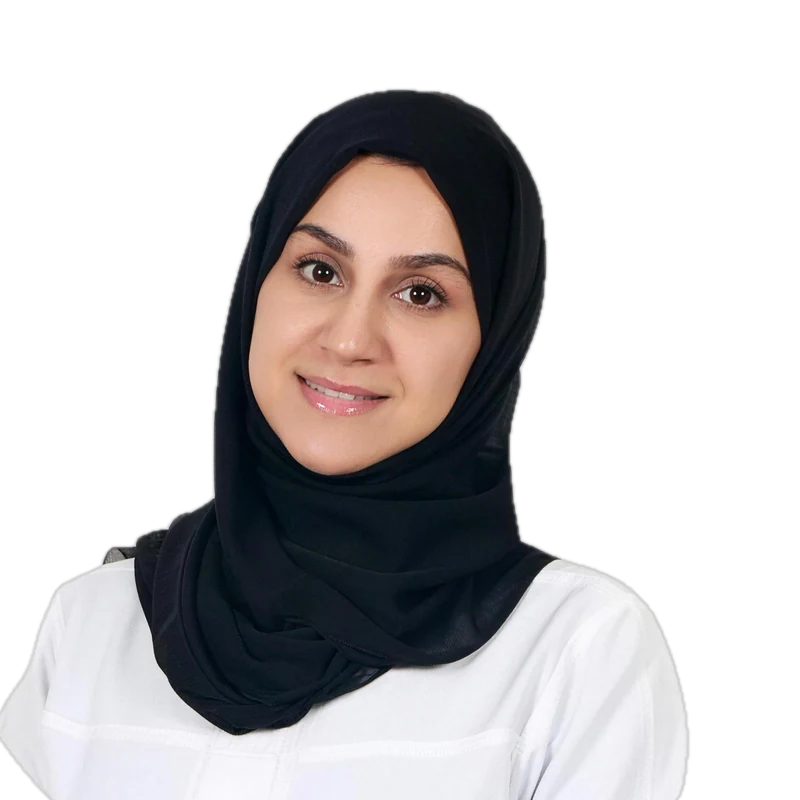 Dr. Shaima BuhamerSpecialist Pediatric Dentist
 Dr. Sharifa AlHajSpecialist Pediatric Dentist
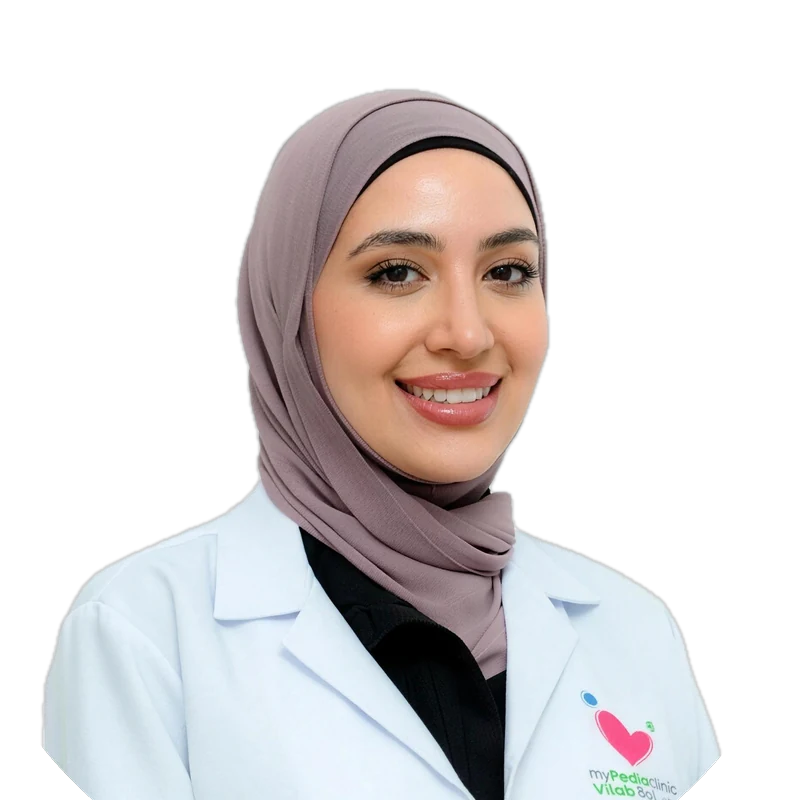 Dr. Sara Atif MustafaSpecialist Pediatric Dentist
Every doctor consults in English and Arabic.
What if it is a baby tooth?
Do not put it back. Reinserting a baby tooth can damage the permanent tooth developing underneath it. Keep it in milk, bring it with you, and we will check the socket, the surrounding teeth and the tooth forming below.
It happened three hours ago. Is it too late to save it?
For reimplantation, probably — after two hours out of the mouth it rarely works, and the root cells will not have survived unless the tooth was kept in milk. Come in anyway. The socket still needs assessing, pain and infection still need managing, and a space maintainer now often saves a great deal of orthodontic work later.
Emergency room or dentist?
Dentist for the tooth itself. Hospital emergency department for head trauma, bleeding that will not stop, a suspected broken jaw, swelling that affects breathing or vision, or signs of spreading infection such as fever with difficulty swallowing. If you are not sure, call and describe it.
My child’s tooth has gone grey a few weeks after a fall.
That usually means the nerve inside died from the trauma and the blood inside the tooth has broken down. It needs looking at. Depending on the tooth it may need pulp therapy or root canal treatment to keep it, and there is whitening for the colour afterwards.
What do we do if it happens after you close?
Follow the first aid above — it is the same at any hour, and it is the part that decides the outcome. For a tooth, a hospital emergency department or an after-hours dental service is the route until we open. Reception opens at 9AM, Sat-Fri, on 055 931 1752. Call as soon as we do and tell them it is an emergency.
What will this cost?
Tell reception your insurer when you call. We hold direct billing agreements with fifteen insurers, and cover differs between the pediatric and dental departments, so eligibility is checked before treatment rather than at the desk. Anything not covered can be split into four payments with Tabby.
Your next step
Start with a conversation.
Tell us what is on your mind and reception will confirm the right specialist and a time.
- Opening hours
- Sat-Fri: 9AM - 6PM
- Insurance
- Direct billing with 15 insurers. Check yours
- Find us
- Al Razi Building 64, Block B
Dubai Healthcare City