

Newborn & premature baby care
Pediatric support for your baby’s first visits, including newborn and premature baby care.

When to book the first visit
Most newborns are seen within the first few days to two weeks of life, particularly after leaving hospital. If your baby was born prematurely, was a low or high birth weight, developed jaundice, or had any complication during or after the birth, we will usually want to see them sooner and more often. If you are not sure whether your newborn needs to be seen, ask. Early advice is easy to give.
Not sure whether your newborn needs to be seen yet? Ask us rather than waiting it out.
A newborn visit confirms your baby is feeding and gaining weight, examines them head to toe, and gives you somewhere to bring the questions that pile up in the first weeks. Most babies are seen within the first few days to two weeks of life, and sooner where the birth was complicated.
Reasons to be seen sooner
Book earlier than the usual first appointment, or bring the next one forward, if:
- Your baby was born prematurely, or was a low or high birth weight
- There were complications during or after the birth
- Jaundice has appeared, or is deepening
- Feeding is painful, or your baby is not settling after feeds
- You are not sure your baby is getting enough milk
- Something simply seems not right to you. That is a reason on its own.

What happens at a newborn visit
- 01MeasurementsWeight, length and head circumference, plotted on growth charts so there is a starting point to track from.
- 02A head-to-toe examinationHeart and lungs, the abdomen, the hips, the eyes and red reflex, the mouth and palate, newborn reflexes, the healing cord stump, and the skin changes that alarm most parents.
- 03Feeding and jaundiceWhether feeding is working, whichever way you are doing it, and how jaundice is tracking. If a tongue tie is affecting feeding, it can be assessed here.
- 04The plan, and your questionsThe vaccination timeline is mapped out with you, and the rest of the visit is yours. Sleep, crying, nappies, skin — nothing is too small.
What to watch for at home
Most newborn worries turn out to be normal. These are the ones worth acting on rather than waiting out.
- A temperature of 38°C or higher in a baby under three months needs urgent medical attention, however well your baby seems
- Fewer than six wet nappies a day from around day five
- More than a tenth of birth weight lost, or birth weight not regained by two weeks
- Jaundice in the first 24 hours, jaundice that deepens or spreads down the body, or jaundice still present past two weeks
- Rapid or laboured breathing, grunting with each breath, or a baby who is hard to wake
- Redness, swelling or discharge spreading from the umbilical cord stump
Who you would see
 Dr. Medhat Abu-ShaabanConsultant Pediatrician, Allergy Specialist & Medical Director
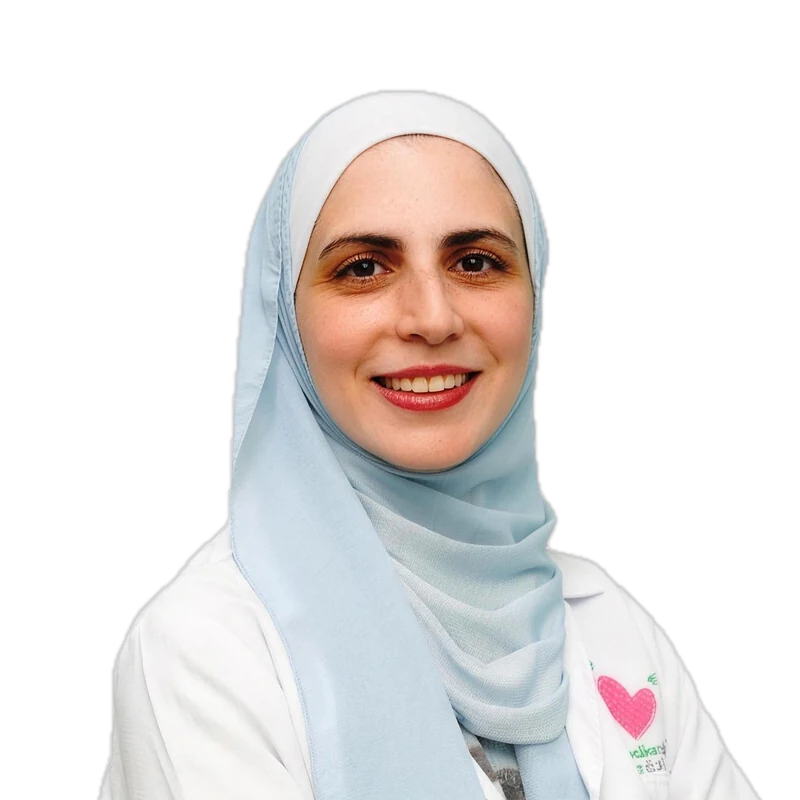 Dr. Tala BelbeissiConsultant Pediatrician
Every doctor consults in English and Arabic.
How soon after birth should we come?
Usually within the first few days to two weeks, particularly after hospital discharge. A premature or higher-risk baby is generally seen sooner and more often.
My baby was born early — what is different?
Preterm babies are usually seen sooner and more frequently, and feeds may need to be smaller and more frequent because they tire easily. Development is judged against the due date rather than the birth date for roughly the first two years, so a milestone that looks late may be exactly on time. Bring the discharge summary and any hospital reports to the first visit, so the plan starts from what has already been done.
How do I know my baby is getting enough milk?
Nappies and weight tell you more than the length of a feed. From around day four, expect at least six wet nappies a day and several yellow stools. Losing some birth weight in the first days is normal, and most babies are back to their birth weight by ten to fourteen days.
Is jaundice something to worry about?
Mild newborn jaundice is common. It usually appears on day two or three, peaks around day five, and settles within two weeks. It should still be assessed. Jaundice in the first 24 hours, jaundice that deepens, and jaundice still present after two weeks all need to be seen.
Sneezing, hiccups, noisy breathing, spitting up — is that normal?
Usually, yes. All four are common in newborns, as are harmless rashes, peeling skin and unsettled evenings. What matters is a change from your own baby’s pattern, and that is exactly what these visits are for.
What should I bring?
Your hospital discharge summary and birth records, notes on feeding and nappies over the past few days, your list of questions, a spare nappy and feeding supplies, and any vaccination records if you have moved from abroad.
When can we start bathing the baby properly?
The cord stump dries and falls off on its own, usually within one to three weeks. Until then, sponge baths keep the area clean and dry. Newborns do not need a bath every day — two or three a week is enough, and more can dry the skin.
Your next step
Start with a conversation.
Tell us what is on your mind and reception will confirm the right specialist and a time.
- Opening hours
- Sat-Fri: 9AM - 6PM
- Insurance
- Direct billing with 15 insurers. Check yours
- Find us
- Al Razi Building 64, Block B
Dubai Healthcare City